Hi, my name is

Tejas Haral

Give me a problem — I’ll teach a machine to solve it.

Senior Generative AI Engineer

I’ve spent the last 5 years building AI/ML systems that are meant to ship, not just impress in a demo — architecting agentic GenAI proofs of concept end-to-end on Azure AI Foundry, orchestrating LangChain and LangGraph, building RAG pipelines that hold up in production, and fine-tuning models via Azure Model Fine-Tuning for problems a generic prompt can’t touch. Earlier in my career, that same approach cut manual test effort by 40% and lifted software efficiency by 30%, all wired together with FastAPI and shipped through CI/CD.

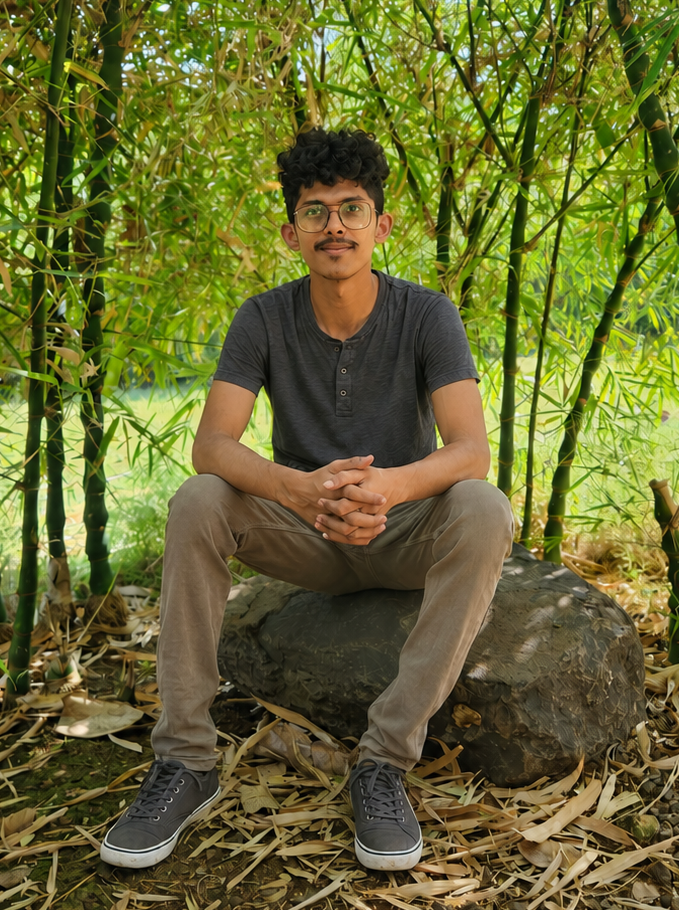
Portrait of Tejas Haral
5+ Years in AI / ML
7 Enterprise GenAI POCs Shipped
40% Manual Test Effort Cut
3 Multi-Agent Systems Architected
keep scrolling — this gets good ↓
LangChain• LangGraph• RAG Systems• Azure AI Foundry• Azure Model Fine-Tuning• Agentic AI• Agent Harness Engineering• FastAPI• FastMCP• Responsible AI• Vector Databases• ChromaDB• FAISS• Docker• GitHub Actions CI/CD• GitLab• LangChain• LangGraph• RAG Systems• Azure AI Foundry• Azure Model Fine-Tuning• Agentic AI• Agent Harness Engineering• FastAPI• FastMCP• Responsible AI• Vector Databases• ChromaDB• FAISS• Docker• GitHub Actions CI/CD• GitLab•

Professional Summary

I’m a Senior Generative AI Engineer, 5 years into building AI/ML systems that hold up outside a notebook. My focus is agentic systems and enterprise GenAI — day to day that means architecting Azure AI Foundry proofs of concept end-to-end: orchestrating LangChain and LangGraph, building RAG pipelines, and fine-tuning models via Azure Model Fine-Tuning for problems a generic prompt can’t solve, all shipped through FastAPI and CI/CD. Earlier in my career, in automotive GenAI, I cut manual test effort by 40% and lifted software efficiency by 30%. I’m just as comfortable running LLMs locally and designing with privacy in mind, for the enterprises where that isn’t optional.

there’s more below ↓

What I Work With

The stack I reach for depends on the problem, but it’s usually some mix of these — the agentic AI tooling I build with day to day, and the engineering underneath that keeps it running in production.

Generative AI & Agentic Systems

LangChain LangGraph RAG Systems Azure Model Fine-Tuning Prompt & Context Engineering Agentic AI Agent Harness Engineering Responsible AI & Guardrails Vector Databases & Embeddings ChromaDB FAISS

Engineering & Cloud

Python FastAPI FastMCP Azure AI Foundry Azure Cosmos DB Azure App Service GitHub Actions CI/CD GitLab Docker OCR & OpenCV YOLO / Deep Learning

let’s get into it ↓

Work Experience

Chapter 01

Senior Consultant – Generative AI

May 2026 – Present

EY Global Delivery Services (EY GDS) · Pune, India

  • Advised cross-functional delivery teams on NL-to-SQL architecture, prompt and context engineering strategy, and agentic AI feasibility, acting as the technical point of contact for GenAI design decisions.
  • Architected and shipped 2 Azure AI Foundry agent-based GenAI POCs end-to-end — from first line of code to a working deployment — using asynchronous Python/FastAPI services, LangChain/LangGraph orchestration, and GitHub Actions CI/CD on a single-server environment.
  • Designed multi-agent orchestration workflows on Azure AI Foundry and LangGraph with agent harnesses, guardrails, and Responsible AI controls to enable safe, autonomous task execution for enterprise GenAI use cases.
  • Built POC application infrastructure on Azure Cosmos DB, Azure App Service, and Azure Static Web Apps — covering data persistence, hosting, and end-to-end integration.
  • Fine-tuned LLMs via Azure Model Fine-Tuning in Azure AI Foundry on custom synthetic datasets, adapting model responses for domain-specific enterprise tasks.

Chapter 02

AI/ML Specialist Engineer

Oct 2021 – April 2026

KPIT Technologies · Pune, India

  • Engineered and deployed generative AI modules using RAG and prompt engineering to automate test case and test script generation/execution, cutting manual effort by 40%.
  • Built intelligent document parsing pipelines with OCR and OpenCV, converting unstructured enterprise documents into ML-ready inputs and cutting preprocessing time by ~35%.
  • Embedded generative AI techniques into legacy enterprise software to reduce process latency and improve software efficiency by 30%, while maintaining production readiness.
  • Architected multi-agent AI systems with retrieval tools to automate document understanding, reducing manual document processing time by ~25% across cross-functional teams.
  • Trained a YOLO object detection model on car infotainment icons and UI elements, boosting detection accuracy by 50% and enabling automated visual regression testing.
  • Engineered a multi-object road detection Deep Neural Network for ADAS safety features, replacing manual image annotation with an automated pipeline and improving model throughput.

next up: the projects ↓

Three Problems, Three Machines

Project 01

AI-Powered Robotic HMI Test Automation for Android IVI

The Problem

Simulated, coordinate-based taps don’t behave like a real finger on real hardware — automotive infotainment (IVI) test cycles were missing defects that only showed up under genuine physical touch.

The Approach

Built an AI agent that drives a DOBOT robotic arm to physically execute touch-based test cases on real IVI hardware — test cases and steps are authored in natural language, each action is validated with vision-language models against live screen captures, and results are compiled into reports.

The Impact

Cut test cycle timeline by 40%, surfacing defects that had gone undetected in prior manual cycles.

DOBOT Robotic Arm AI Agent ADB AOSP VLM Validation Hardware-in-the-Loop Testing
Proprietary — built at KPIT Technologies

Project 02

AI-Driven Automation Testing Agent

The Problem

Scripted test automation for Android IVI platforms was brittle — coordinate-based scripts broke with every UI change and needed constant, expensive maintenance.

The Approach

Built an agentic AI solution that uses LLM decisioning to interpret and execute test flows dynamically, with image-based validation standing in for brittle scripted assertions.

The Impact

LLM-driven decisioning replaced brittle coordinate-based scripts, and image-based validation caught visual regressions scripted assertions were missing.

Agentic AI LLM Decisioning Image Validation
Proprietary — built at KPIT Technologies

Project 03

Automation Framework Report Analysis

The Problem

Root-causing test failures from XML automation reports was slow and manual, so defects often got filed late or without enough context to act on.

The Approach

Built a Streamlit app that parses XML test reports and uses local, privacy-preserving LLM inference to root-cause failures automatically, then auto-files Jira defects with that context attached.

The Impact

Cut manual triage time and ensured every auto-filed defect shipped with root-cause context already attached.

Streamlit Local LLM Jira Automation
Proprietary — built at KPIT Technologies

Education & Certifications

BE, Computer Engineering

Savitribai Phule Pune University

Aug 2021 – Aug 2024 · GPA 8.0/10

Pursued while employed full-time

Diploma, Computer Engineering

Pimpri Chinchwad Polytechnic

Aug 2018 – Jul 2021 · GPA 89.3%

My B.E. timeline (Aug 2021 – Aug 2024) overlaps with the start of my professional experience at KPIT (Oct 2021) — both are genuine and independently verifiable. Eager to start my career early, I began working while still completing my degree, attending classes each morning before heading into my job.

Certifications

  • Microsoft Certified: Azure AI Fundamentals (AI-900) — in progress
  • Databricks Certification — in progress
  • Multi AI Agent Systems with CrewAI
  • Functions, Tools & Agents in LangChain
  • LangChain for LLM App Development — DeepLearning.AI
  • Machine Learning with Python — Coursera

want the full script? grab the resume ↓

Got a problem worth solving?
Let’s talk.

Open to conversations about agentic AI systems, enterprise GenAI architecture, and interesting problems in general.